
Wealthy Kauaʻi NIMBY Bridget Hammerquist Files Lawsuit Against Gap Housing Project Targeted to Kamaʻāina
In a blatant disregard for the kamaʻāina impacted, the wealthy Kauaʻi NIMBY has filed a lawsuit against the “gap housing” development called South Kōloa Town.
Hammerquist filed her lawsuit in March with the Fifth Circuit Court. She uses not one but three law firms to represent her nonprofit: the Law Offices of Lance D. Collins, the Law Office of Bianca Isaki, and the Law Office of Ryan D. Hurley.
In her communications, she made it clear her intent to file a lawsuit against the County, calling the project’s approval a “dark hour.”

Hammerquist is no stranger to using her nonprofit to file lawsuits in Hawaiʻi. A quick read of the “Current News” on the Friends of Māhāʻulepū shows her willingness to sue as she sees fit.
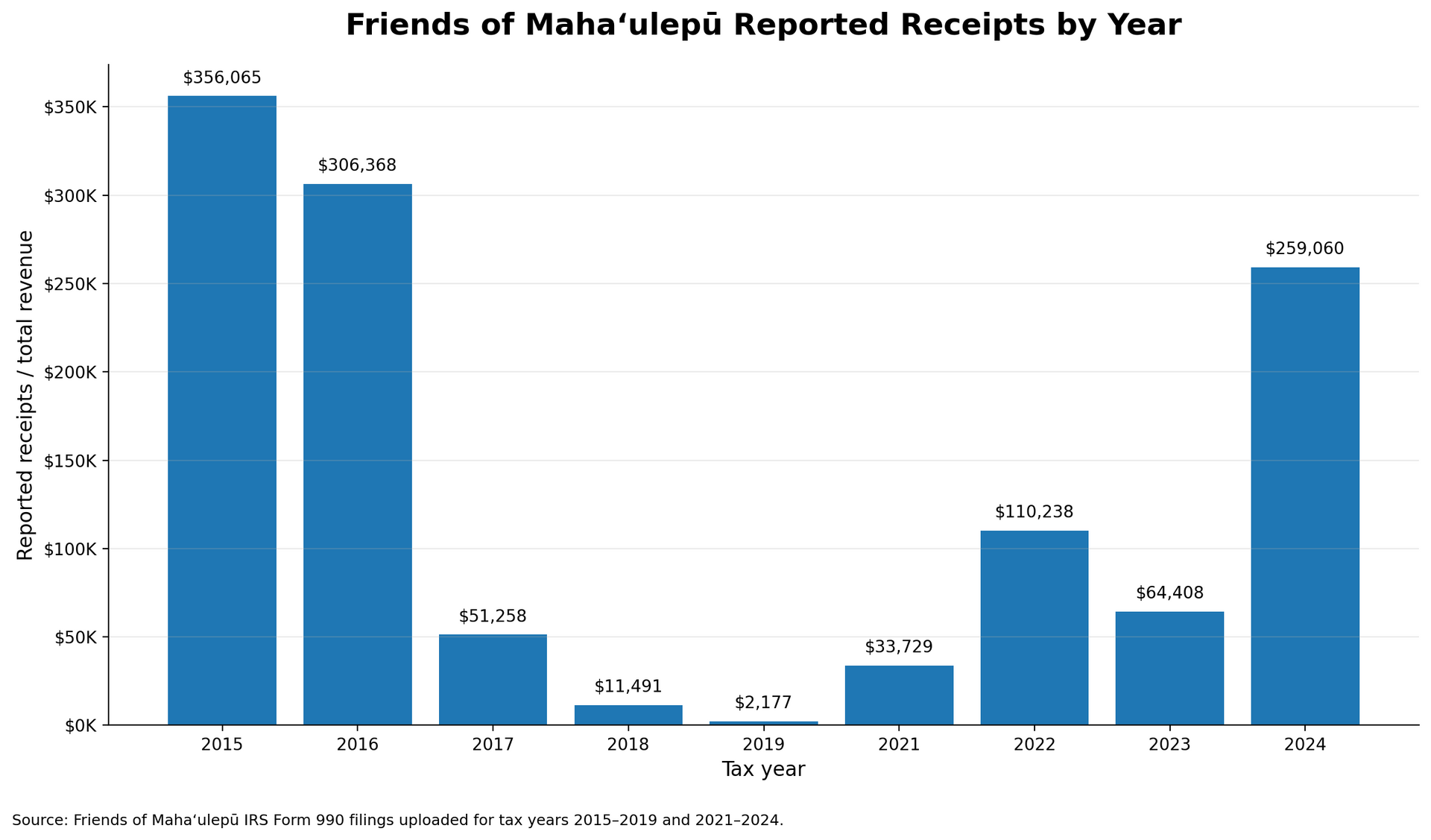
Her nonprofit is well-funded, as shown in the chart below, based on her nonprofit’s Form 990 filings on the IRS website. Hawaiʻi doesn’t require a nonprofit to list its funders, so we’ll never know for a fact where the money comes from, but it’s a safe assumption that it’s not coming from Kānaka Maoli.

As we reported previously, her nonprofit board consists of the retired mainland real estate developer Jay Kechloian and his wife, Eileen. Hammerquist has written that Jay has matched donation funds in the past. Hammerquist has launched two GoFundMe campaigns that have received contributions from individuals, but they are far short of the total amounts reported to the IRS.
Hammerquist’s lawsuit is another classic case in Hawaiʻi of someone using their wealth to push forward their own agenda at the expense of Kānaka Maoli.
The South Kōloa Town project is a residential development in the town of Kōloa. It is located near Kōloa Village and is an extension of the developer’s current residential project. You can watch the video on their website. The proposal is located in an empty field that is surrounded by homes. This is not sacred ʻāina.
According to the project’s website, “at least 45% of the units must be marketed to existing Kauaʻi County residents.” These will be homes intended for kamaʻāina who make too much to qualify for low-income housing but cannot afford the island’s median home price of $1.4 million.
These are the types of homes that are needed for kamaʻāina, not just on Kauaʻi, but across the entire pae ʻāina.
State elected officials need to draft legislation to stop these wealthy NIMBYs from using their money to stop housing that is desperately needed.