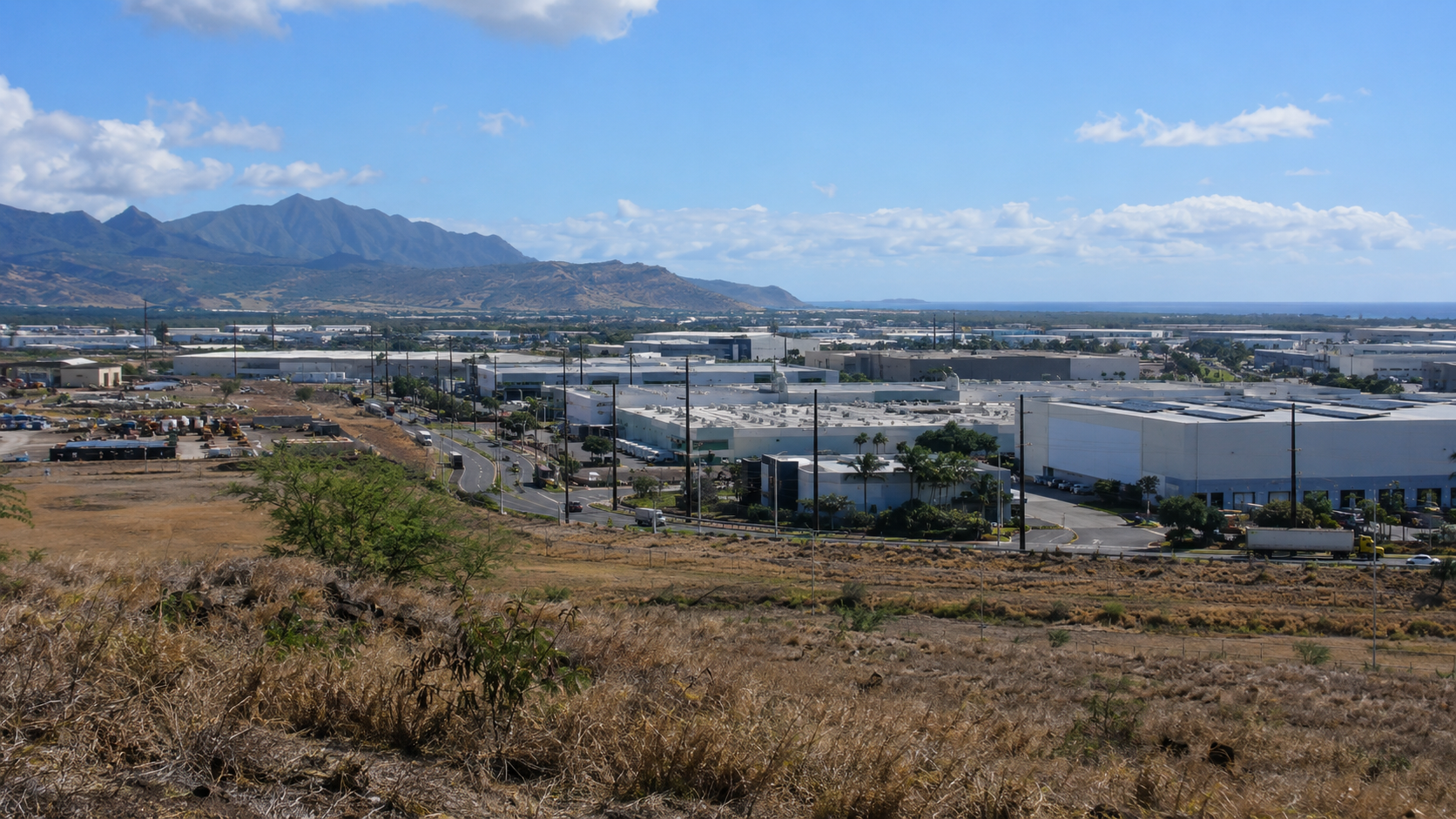
Data Center Imperialism or Beneficiary Boon? Questioning DHHL's Geothermal Push; Hearings This Week

The Department of Hawaiian Home Lands (DHHL) Chairman Kali Watson is actively pursuing state legislative funding, requesting up to $15 million over three years, to investigate 12 potential geothermal exploration sites across Hawaiʻi Island, Maui County, Oʻahu, and Kauaʻi.
Watson is framing the proposal as a way to lower electricity costs for homesteaders and generate royalty revenue that could help address the department’s massive waitlist problem.
However, a deeply concerning question has emerged from community informational briefings and state hearings:
Is the DHHL’s massive geothermal push intended to quietly lure energy-hungry, mainland-owned tech data centers to the islands?
While the official narrative focuses on community power, a recent U.S. Department of Energy report details how modern data centers are aggressively seeking to buy firm, 24/7 geothermal baseload power to meet the skyrocketing electricity demands of artificial intelligence.
While pairing geothermal with data centers may look profitable on paper, the proposal demands intense skepticism regarding whether it aligns with DHHL's core mission to return Native Hawaiians to their ancestral lands.
Geothermal Power for Mainland Data Centers
The use of geothermal energy to power digital infrastructure is rapidly expanding across the continental United States. Proponents of the DHHL project frequently cite mainland examples to demonstrate the technology's commercial viability:
- California: As the nation's leader in geothermal electricity, California has long utilized its vast underground reservoirs to support grid stability, acting as a blueprint for high-tech industrial integration.
- Nevada: Clean-energy developers like Fervo Energy have established highly publicized partnerships with Google to deploy next-generation, enhanced geothermal systems. These systems pump carbon-free electricity directly into the grid to keep local Google data centers operational around the clock.
- Utah: The state recently formalized the "Enhanced Geothermal Data Center Corridor" with organizations like Fervo Energy. This initiative creates specific, localized zones where developers route underground heat directly into heavy-compute artificial intelligence hubs.
- Pennsylvania: Companies like Iron Mountain Data Centers utilize deep, natural underground geothermal water reservoirs in Boyers, Pennsylvania, to naturally cool thousands of heavy-load servers. This significantly cuts down on traditional, high-cost cooling infrastructure.
* * * UPCOMING GEOTHERMAL INFORMATIONAL MEETINGS IN O'AHU * * *
Friday, June 12, 2026 | Geothermal Informational Briefings, Kapolei, O’ahu @ 6 p.m.
- Location: Hale Ponoʻi (DHHL Main Office – Kapolei) 91-5420 Kapolei Parkway, Kapolei, Oʻahu
Monday, June 22, 2026 | Geothermal Informational Briefings, Waimānalo, O’ahu @ 6 p.m.
- Location: Waimānalo Hawaiian Homestead Association Hālau, 41-253 Ilauhole Street, Waimānalo, O’ahu 96795
If you can't attend one of the hearings, then let the DHHL's Chair Kali Watson & Commissioners know your opposition or concerns with geothermal mining or exploration or data centers on native lands.
Email Address: dhhl.icro@hawaii.gov
Chairman Kali Watson (Direct Office Line): 808-730-0157
Crucial Questions Hawaiʻi Must Face
While these mainland facilities prove the technology works, transferring this heavy-industrial model to a fragile, localized island ecosystem creates significant friction. Community advocates and beneficiaries are raising critical questions that the state has yet to answer transparently:
Who Actually Benefits from the Power?
A data center primarily exports digital labor to mainland tech corporations while consuming local resources. Relying on massive corporate entities to subsidize local homesteads places community land at the mercy of external market demands, rather than on building localized, community-owned infrastructure.
Cultural Desecration and the Legacy of Puna
Native Hawaiian testifiers have repeatedly pushed back at state hearings. They express deep concerns over the spiritual impact of drilling into the elemental assets of Tūtū Pele. Furthermore, decades of community trauma stem from the Puna Geothermal Venture (PGV), the state's only operating geothermal plant, which faced intense historical criticism over toxic hydrogen sulfide leaks and emergency blowouts.
The Server Rack vs. The Home
DHHL's explicit mandate is to put people on the land, not to build high-performance computing facilities. Industrializing pristine trust tracts, such as Humuʻula on the slopes of Mauna Kea or Upper Kawaihae, to act as a "server farm for someone else's empire," directly clashes with the fundamental need for affordable local housing and agricultural self-sufficiency.
“Trust” Is Still Not There
Hawaiʻi already knows what happens when big energy promises are made without enough trust, transparency, or community control. Communities have lived through high electricity costs, utility politics, and the long shadow of controversial geothermal development in Puna. Residents should not be asked to simply “trust the process” because the same government that failed to house beneficiaries now says it has found a revenue solution under the ground.
That is not accountability. That is another leap of faith. And when the land at issue belongs to the Hawaiian Homes trust, faith is not enough. Watson should not be allowed to sell this as a clean-energy win while avoiding the central question: Who is this really for?
If the answer is beneficiaries, then DHHL should put binding protections in writing before a dollar is spent. No vague promises. No “future community benefits.” No consultant language that sounds good at the Capitol but leaves families exposed later.
The public deserves to know whether DHHL is planning geothermal for homesteads, or whether Hawaiian Home Lands are being positioned as energy assets for outside demand.
That distinction matters.
A geothermal project that directly lowers costs for beneficiary homes, protects cultural resources, respects community consent, and funds actual homestead development is one conversation.
A geothermal strategy that opens trust lands to industrial-scale power deals, data center speculation, and mainland corporate demand is something else entirely.